An Open Letter to Education Administrators
- 3 hours ago
- 4 min read
Updated: 3 hours ago
The craft of teaching—and the choices we face in the age of AI
I’ve spent much of the last several years working with teachers in CRE Residencies and Design Studios. And across those experiences, I’ve seen something that continues to encourage me: teachers are inspired by opportunities to think deeply about their students and their teaching through the CRE mental model.
I’ve been leading variations of residencies and design studios for nearly two decades now—long before the trumped-up controversies around Culturally Responsive Education or the misrepresentation of a well-vetted and rigorously interrogated construct like Equity.
I’ve been learning how to understand and communicate the meaning and utility of these concepts since I was a doctoral student at American University in Washington, DC in the early 2000s. I learned a lot in my PhD studies, and my academy bona fides are totally legit—but I am first-and-foremost a teacher. I love to teach, and I greatly admire teachers. I like to think that I was born to be a teacher, and I know that there are many others like me.
In 2026, teachers are tired.
Morale is low.
Burnout is real.
And while I don’t claim to have all the answers to the problems facing public education in America, I think we need to pay much more attention to what we’re asking teachers to spend their energy on, and what we’re taking away from them.
I know schools and districts are trying to help. I know that scripted curricula and prepackaged programs are often adopted with the intention of providing teachers with support and access to high-quality instructional materials. It’s a derivative of the factory metaphor for school. I also know that it’s big business ($$$).
But I don’t think scripts are solving the problem.
In the most affluent schools, where conventional measures of achievement already look pretty good, we’re seeing students who are increasingly disengaged from learning itself. They may be very good at doing school, and they’re definitely invested in getting A’s. They know how to complete the assignment, earn the grade, and accumulate the credentials. But that isn’t the same thing as being deeply engaged in learning—not even close.
And in our most vulnerable schools, where we desperately need inspired teaching to be responsive to the students in front of us, scripts can move us in precisely the wrong direction.
Those are the places where we need more responsiveness, not less.
And responsiveness depends upon teachers; it depends on what a teacher notices. What they know about their students. What they hear in a conversation. What they discern from the context of human relationships. What they recognize about culture, identity, and emotion. These are the natural ingredients of rigor and engagement, and it depends upon the ability of teachers to take in all of those insights and make decisions about what these particular students need from this particular learning experience.
That’s the craft of teaching.
But I need those of you who make decisions about teaching and curriculum to take note of an increasingly overlooked truth: the work of planning is part of what makes teaching joyful.
There’s something tremendously satisfying about connecting the dots yourself. About knowing your students, knowing what you want them to understand, and imagining an experience that might bring those things together. That’s the background that make the moments when students get it truly memorable—even defining—for teachers. It’s life-giving.
When we remove teachers from that design process, we shouldn’t be surprised when they feel less connected to the work. It’s like showing up to your wedding day that’s been planned completely by someone neither you nor your fiance has ever met before: everything may be perfectly arranged, but very little of it feels like yours. The more teachers are engaged with the craft of teaching, the more likely they are to remain engaged with the profession. And the more likely we are to see their very best work.
Now we have artificial intelligence entering this conversation. And I think AI presents us with a choice. If scripts and prepackaged curricula really are the answer to the complexity of teaching, then perhaps the next logical step is to remove the human teacher altogether and replace them with an AI teacher. We’re in big trouble if that’s where we're headed. The future of free and public education likely won’t survive such a shift.
I believe there is a much better use of this technology. AI should extend human intelligence, not replace human judgment. And when it comes to teaching, responsible AI should never operate outside the agency of the teacher.
The teacher is the one who determines what’s important.
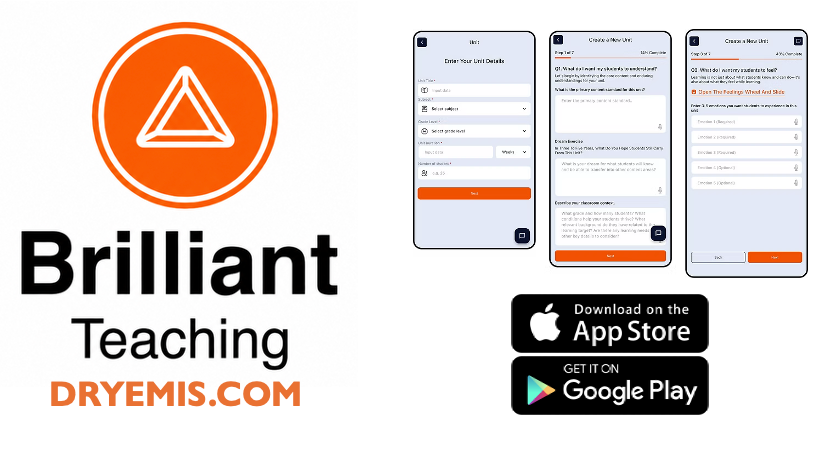
That principle is at the heart of the app I’ve been building over the past year. I’ve worked directly with developers to create the Brilliant Teaching App, an AI-powered planning tool built around the CRE mental model.
It doesn’t give teachers a script. It asks teachers to think:
What do you want your students to understand?
What are your targets for rigor?
How do you want your students to feel?
What will engagement look like?
What opportunities will you have to be responsive to the students who are actually sitting in front of you?
The teacher provides the insight. The technology helps the teacher develop, connect, and extend that thinking. That’s the kind of relationship I believe we should be building between teachers and AI.
I think we should be finding better ways to support what only brilliant teaching can do: notice, respond, and design for the human experience. Because I don’t think the future of teaching should be about finding better ways to tell teachers e
xactly what to do.
*** *** ***