AI is Here... So Will We Use it Responsibly?
I first entered the teaching profession more than thirty years ago.
I mention that because my historical perspective is relevant.
Back then, it was a different world—especially as far as technology is concerned. I didn't even have a cell phone. I hadn’t yet sent my first text message. I didn't even get my first email address until the summer before my first year of teaching, and I didn't use the internet much, if at all, until several years later.
In my early years in the classroom, I had a teacher-colleague who refused to touch her district-issued desktop computer—which the rest of us were gleeful to have—because she called it a “distraction.” In her mind, the technological wave of the internet was a departure from the essence of teaching.
But if you worked with a teacher today who held that same view, you'd almost certainly see that position as maladaptive, obsolete, reckless, and irresponsible. The technology of the internet was transformative—it couldn't be ignored…
My point is that some technologies enter the zeitgeist and fundamentally affect the way teachers work. Rather than pretend it doesn't exist, the more responsible path is to incorporate it ethically into sound pedagogy—so that it isn't in contradiction with the essence of teaching.
Every transformative technology seems to follow a similar path. At first it feels optional. Then controversial. Until, eventually indispensable. And finally, almost invisible. We stop debating whether it belongs and learn to use it well.
And I think that's exactly where we are with artificial intelligence.
I know some teachers are reluctant. I certainly was. In fact, I found AI offensive when I first encountered it. I was highly upset! I opened an account shortly after ChatGPT became publicly available in late 2022, submitted exactly one inquiry, and then stubbornly refused to look at it again until the spring of 2024! Just the idea of a tool that would work so fast and seemingly so confidently to produce what could pass for a competent response shook me. I only came back because multiple teachers asked me what I thought about it. Now I'm clear about where I stand.
AI isn't going anywhere. It's here. And I think its influence will ultimately prove even more far-reaching than email or the internet itself. Ignoring it will not protect good teaching. In fact, at this point, refusing to engage with it at all begins to look less like caution and more like professional malpractice.
The question is no longer whether teachers should learn to use AI. The question is whether we'll be smart about how to use it. I've settled on a guiding principle that has become my touchstone:
The responsible use of artificial intelligence is to extend human intelligence. The reckless use of artificial intelligence is to replace human judgment.
That's the distinction that matters.
If you think of artificial intelligence—particularly large language model tools—as engines for extending patterns and associations embedded in language, sort of like a word calculator…
the more context you provide,
the more carefully you think,
the more intentionally you craft your request,
and hence, the more useful the responses become.
In this way, AI is conceptualized as a tool to scale human judgment. That’s a critical distinction and guiding motif for the thoughtful incorporation of AI tools into the profoundly human craft of teaching.
Large language models don't think in the human sense. They extend relationships already present in language. They recognize patterns, complete associations, and predict what ideas are likely to fit together. That doesn't make them intelligent in the way we humans think of intelligence. It makes them extraordinarily powerful language tools. Which means their usefulness depends almost entirely on the quality of the language and the quality of the thinking that sources the language used to direct the AI tools.
The intelligence isn't in the language model itself; the intelligence inheres in the uniquely human capacity to extract meaning from the symbols of language. AI works with those symbols. Human beings are the ones who give them meaning.
AI doesn't understand what it's saying. It doesn't possess lived experience. It doesn't know emotion firsthand. But it can become remarkably effective at extending the meaning already present in your language.
If you supply thoughtful prompts grounded in your own experience, judgment, and reflection, AI becomes a powerful amplifier. But if you outsource the thinking itself, it becomes something else entirely.
The experiences and emotions that make language meaningful still belong to you. The AI is simply the conveyor of that meaning, but teaching has never been the act of delivering information. It has always been the act of exercising judgment. Teachers notice. They interpret. They weigh competing priorities. They respond to the human beings sitting in front of them. AI can help us think through those judgments, but it cannot make them for us.
That's one of the reasons I designed the Brilliant Teaching app the way I did…
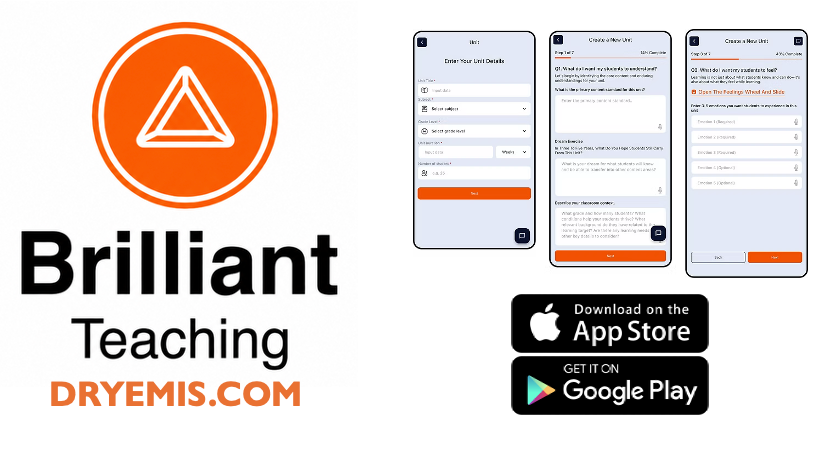
I wanted to create a tool that helps teachers leverage their deeply human awareness of the teaching task, their students, their students' assets, and the unique social and cultural context in which they teach.
Many of the AI products on the education market are productions of the same testing and textbook companies that have spent decades selling generic instructional scripts. Too often those systems replace teacher judgment with third-party corporate judgment. This raises the question for teachers: Is that really who you want making instructional decisions with AI?
The Brilliant Teaching app was designed differently. It's intended to be a dynamic workspace that I will continually update and refine. Its knowledge base is grounded in my books and in a carefully curated body of educational research designed specifically to support teachers as they design meaningful learning experiences.
Five years from now, I don't think anyone will still be debating whether AI belongs in education. The conversation will be whether we're using it responsibly. So ask yourself, has your AI provider demonstrated an understanding of sound pedagogy? Does the AI tool strengthen teacher judgment—or quietly replace it? Those are the questions that matter.
One final thought.
The AI future belongs to today's readers. The better you become at using language. The better you become at communicating meaningful thought. The better you become at understanding the thoughts of others. The better you'll become at using artificial intelligence. Because AI ultimately works with language. And language works because it carries human meaning embodied in experience and grounded by emotion.
So I’ll wrap this post up with two pieces of advice for teachers.
First, spend time tinkering with some AI tool of your choosing. Your goal is to get a feel for how it responds to your prompts.
Second, read, read, and read some more.
Read Culturally Responsive Education in the Classroom. If you've already read it, read Brilliant Teaching. If you've read both, read something else that challenges and stretches your thinking. Because every thoughtful book you read strengthens the very part of your mind that artificial intelligence can never replace—and the very part that allows you to use it responsibly.
Every thoughtful book you read enlarges your language-based conceptual network—your capacity to draw meaning from texts. Every new idea creates additional patterns, richer associations, and deeper understanding. And because AI works through language, every expansion of your own understanding increases your ability to use AI well.
Thirty years ago, some teachers dismissed computers as distractions. Today that sounds almost inconceivable… completely out of step with the profession… I suspect that, before long, we'll feel much the same way about AI. The question won't be whether teachers should use it. The question will be whether they learned to use it wisely. And wisdom has never come from machines. It’s always come from thoughtful people using every available tool in service of better judgment.
Dr. Yemi


